



Busan, Korea

Busan, a bustling metropolis of approximately 3.3 million residents, serves as the economic and cultural hub of southeastern Korea. Although it occupies only 0.8% of the Korean Peninsula's landmass (769.89km²), Busan boasts a stunning natural environment characterized by a harmonious blend of mountains, rivers, and the sea. The city features a coastline of superb beaches, scenic cliffs, and mountains that offer excellent hiking trails and extraordinary views, along with natural hot springs scattered throughout the city. Busan enjoys four distinct seasons and a pleasant temperate climate year-round.
As Korea's second-largest city and its primary international port, Busan handles over 80% of the nation's container traffic, ranking it as the fifth-largest container port in the world. Its strategic location at the southeastern tip of the Eurasian continent makes it a vital gateway to the Korean Peninsula and Northeast Asia.
Busan has firmly established itself as a world-class city for tourism, culture, and international conventions. Since the opening of the Busan Exhibition and Convention Center (BEXCO) in May 2001, the city has successfully hosted numerous prestigious events, including the 2005 APEC Economic Leaders' Meeting, the 2014 and 2019 ASEAN-Republic of Korea Commemorative Summits, and the Annual Meeting of the African Development Bank (AfDB) in 2018. These achievements have solidified Busan's reputation as a premier MICE destination in Northeast Asia.
Building on this rich legacy, Busan continues to strengthen its global standing. The city is dedicated to becoming a leading global hub, offering state-of-the-art infrastructure and unique cultural experiences for international visitors and conference delegates alike.
Location
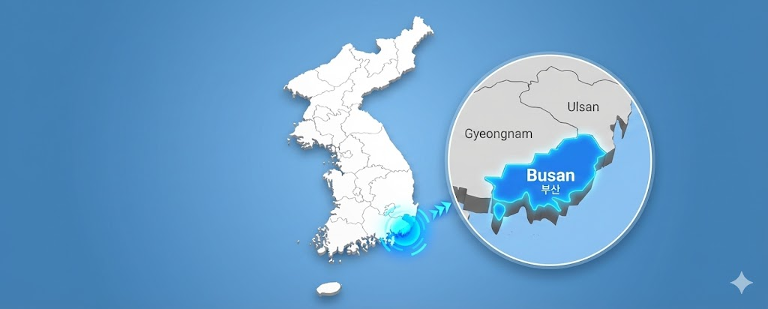
Geographically, Busan has the Straits of Korea to its south; Ulsan to the north; and Gimhae to the west. Cities that share a similar latitude with Busan include Jinhae and Gwangju in Korea, as well as Tokyo, Algiers and Oklahoma City internationally. Busan is 9 hours ahead of GMT. As for its geopolitical location, the city is located at the southern tip of a strip that connects Asia, Siberia and Europe. It also serves as a main gateway to the Pacific Ocean. This strategic location places the city at the center of international sea transportation.
Climate
Busan is located at the southeasternmost tip of the Korean peninsula in a mid-latitude temperate zone with seasonal winds. It has four seasons: spring, summer, fall and winter. Compared to regions in the north and farther inland, Busan has a mild climate and is consequently frequented by many tourists throughout the year, all of whom hope to take advantage of the city’s nice weather and beautiful scenery.
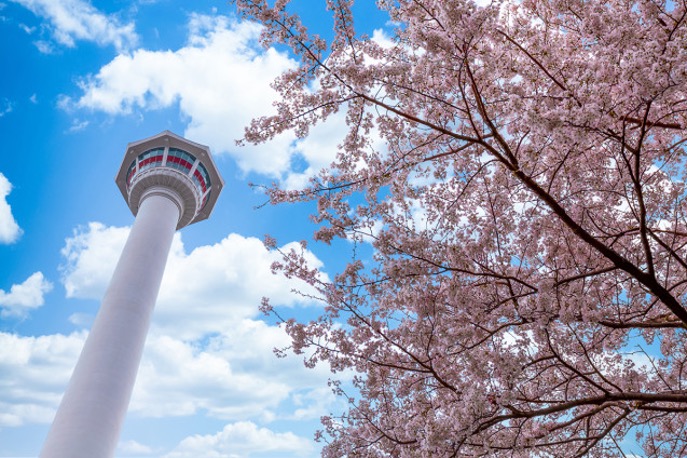 Spring
Spring begins in early March and ends in late June. As the Siberian High begins to dissipate, the temperature increases. Busan possesses an average temperature of 14.9℃ which is higher than some neighboring cities like Ulsan and Tongyeong. However, due to a strong spring wind (average 4.4m/s), the heat index remains very low which can sometimes make for a cool beginning to the season. In late March, apricot flowers and dandelions begin to bloom while in April, peach blossoms, swallows and frogs can be seen. Daily temperature ranges can vary widely and severe stretches of abnormally dry weather, periods of yellow dust and late frosts also commonly occur during the spring months.
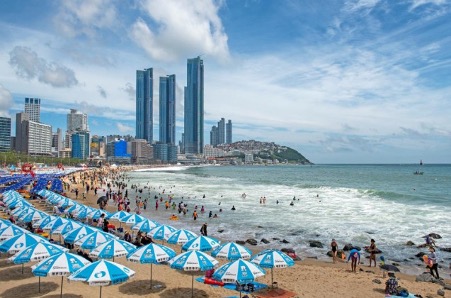 Summer
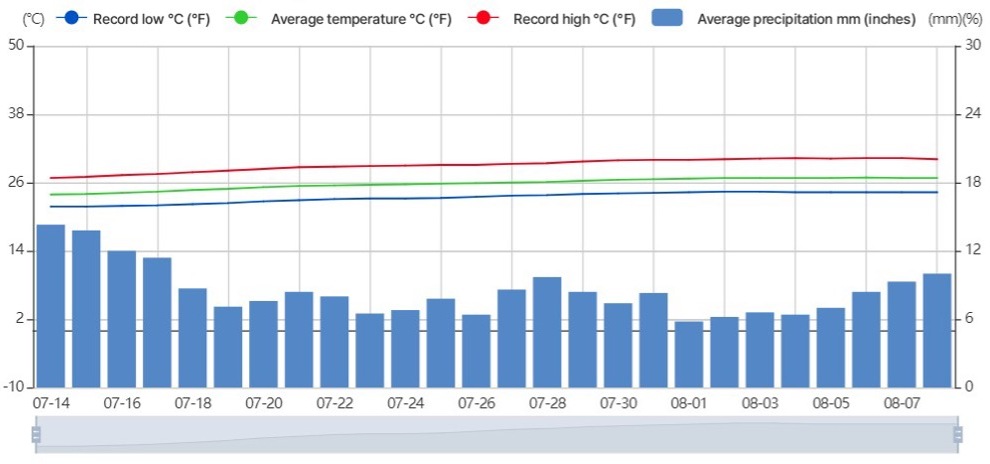
Summer starts at the end of June and ends in early September. The rainy season starts the end of June and lasts until the beginning of August. Precipitation during the summer months accounts for 50 to 60 percent of the total for the year.The average temperature in July is 23.9℃ and daily temperature ranges are very small at 5.3℃. Summer highs hit their peak at the end of July through mid-August when temperatures climb to 32°C. The city also experiences many tropical nights during this time as nighttime temperatures hover around 25℃.
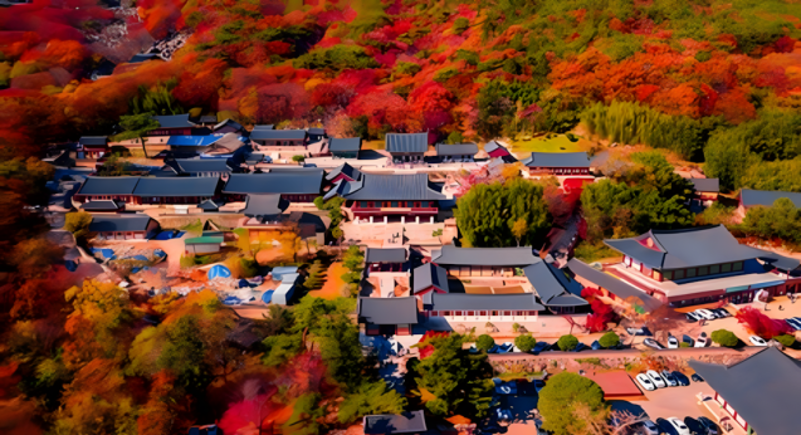 Fall
Fall
Fall begins in early September and lasts through late November. Continental high pressure brings nice clear weather to the Busan area. In September, due to changing weather patterns, nighttime and morning lows both start to fall, with the average temperature for the month hitting 21.8℃ and 17℃ in October. From November, the temperature starts to drop suddenly due to strong, cold northwesterly seasonal winds.
 Winter
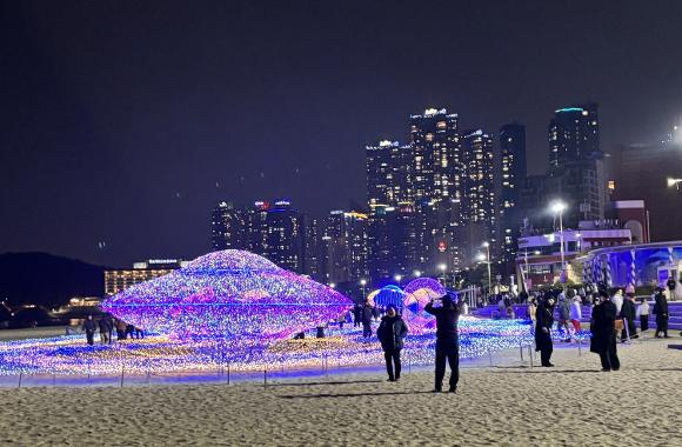
Winter runs from the end of November and continues until the end of February with an average temperature of 3.8°C. Rising amounts of cold air over Siberia force bitter cold northwesterly monsoons down on the peninsula resulting in temperatures below the freezing mark. Due to changing local weather patterns, Busan will typically experience three cold days followed by four warm days throughout the winter months. Busan has the mildest weather in Korea after Jeju Island as it has the second lowest number of days when the daily minimum temperature falls below zero at 53.
Spring begins in early March and ends in late June. As the Siberian High begins to dissipate, the temperature increases. Busan possesses an average temperature of 14.9℃ which is higher than some neighboring cities like Ulsan and Tongyeong. However, due to a strong spring wind (average 4.4m/s), the heat index remains very low which can sometimes make for a cool beginning to the season. In late March, apricot flowers and dandelions begin to bloom while in April, peach blossoms, swallows and frogs can be seen. Daily temperature ranges can vary widely and severe stretches of abnormally dry weather, periods of yellow dust and late frosts also commonly occur during the spring months.
Summer starts at the end of June and ends in early September. The rainy season starts the end of June and lasts until the beginning of August. Precipitation during the summer months accounts for 50 to 60 percent of the total for the year.The average temperature in July is 23.9℃ and daily temperature ranges are very small at 5.3℃. Summer highs hit their peak at the end of July through mid-August when temperatures climb to 32°C. The city also experiences many tropical nights during this time as nighttime temperatures hover around 25℃.
Fall begins in early September and lasts through late November. Continental high pressure brings nice clear weather to the Busan area. In September, due to changing weather patterns, nighttime and morning lows both start to fall, with the average temperature for the month hitting 21.8℃ and 17℃ in October. From November, the temperature starts to drop suddenly due to strong, cold northwesterly seasonal winds.
Winter runs from the end of November and continues until the end of February with an average temperature of 3.8°C. Rising amounts of cold air over Siberia force bitter cold northwesterly monsoons down on the peninsula resulting in temperatures below the freezing mark. Due to changing local weather patterns, Busan will typically experience three cold days followed by four warm days throughout the winter months. Busan has the mildest weather in Korea after Jeju Island as it has the second lowest number of days when the daily minimum temperature falls below zero at 53.
Climate Busan
More information
for Busan can be found

Organized by

Supported by
Sponsored by